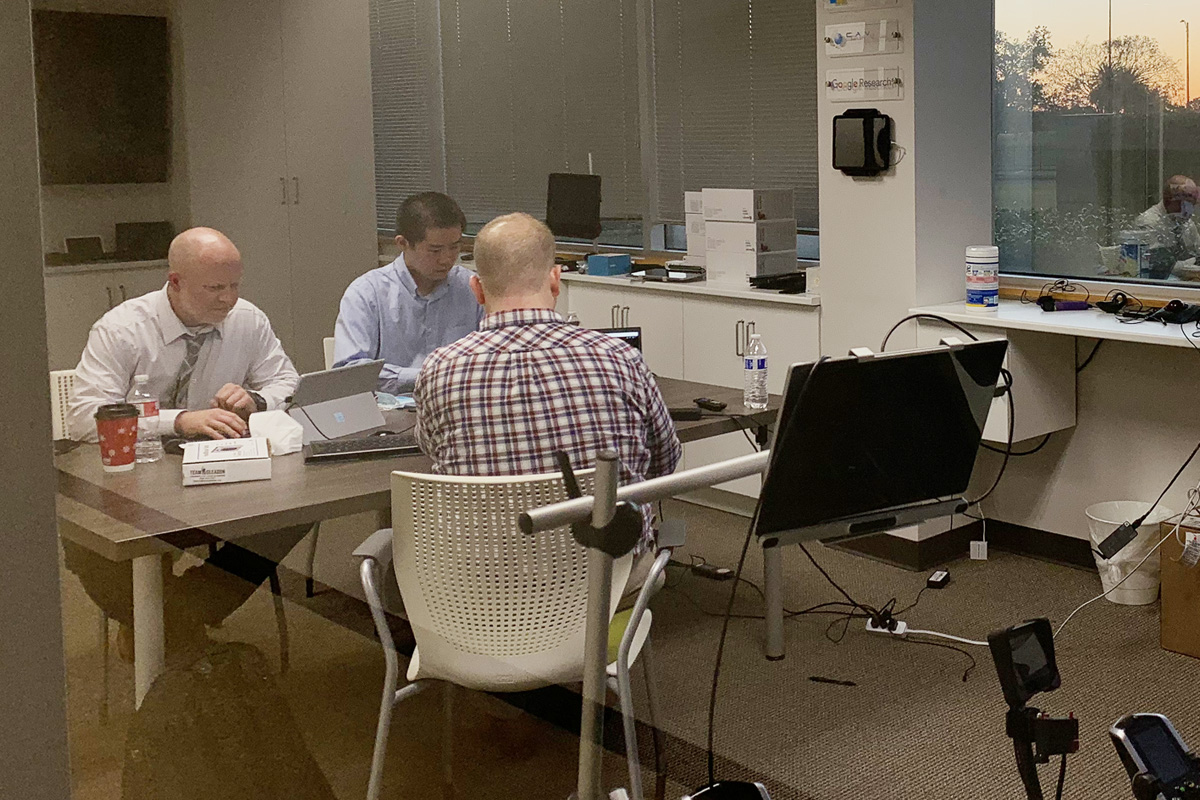
Technology is advancing at an unprecedented pace, and its impact on communities like those living with ALS is monumental. SpeakFaster is a transformative example of using advancements in machine learning and artificial intelligence to make a tangible difference in people’s lives.
As Blair Casey, Executive Director of Team Gleason, and a former caretaker, reflects:
“I watched my friend Steve Gleason struggle to communicate with his family in real time. It’s hard to imagine the frustration of not being able to keep up in conversations—whether as a parent, a professional, or simply being part of the community. Communication is at the core of it all. SpeakFaster changes that reality. It’s not just an innovation; it’s a lifeline.”
For people with ALS, communication often slows to a frustrating 10-12 words per minute compared to the 150 words per minute the average person speaks. This gap creates barriers to meaningful interaction and can take away moments that make life fulfilling. SpeakFaster—a collaboration between Google Research and Team Gleason—bridges this divide by leveraging large language models (LLMs) to enhance speed, reduce fatigue, and allow for more natural, real-time conversations.
“SpeakFaster is proving what’s possible with the current state of AI and eye-gaze communication. It’s a turning point. This is the kind of innovation that every communication software should incorporate, and we owe a debt of gratitude to the people making it happen. They’re shaping the future for the communities we care about most,” said Casey.
With faster communication, greater ease of use, and accessibility at its core, SpeakFaster is paving the way for a brighter, more connected future for individuals living with ALS. It’s a breakthrough in augmentative and alternative communication (AAC) systems, showcasing what can be achieved when technology and purpose come together.
Acknowledgements: We would like to thank the dedicated members of Google’s Project Euphonia and Team Gleason team members who have made this research possible. Specifically, we would like to acknowledge the valuable contributions of Steve Gleason, Blair Casey, Shanqing Cai, Jay Beavers, John Costello, Julie Cattiau, Katie Seaver, Richard Cave, Anton Kast, Pan-Pan Jiang, Rus Heywood, Michael Terry, James Stout, Mahima Pushkarna, Jon Campbell, William Ito, and Shumin Zhai. We are grateful to Tobii (R) for granting us permissions to use the Tobii Stream Engine for eye-gaze prototype development. We also wish to express our appreciation to the Leonard Florence Center for Living for their unwavering commitment to improving independence and support for individuals with ALS. Their support has been instrumental in advancing this important work.
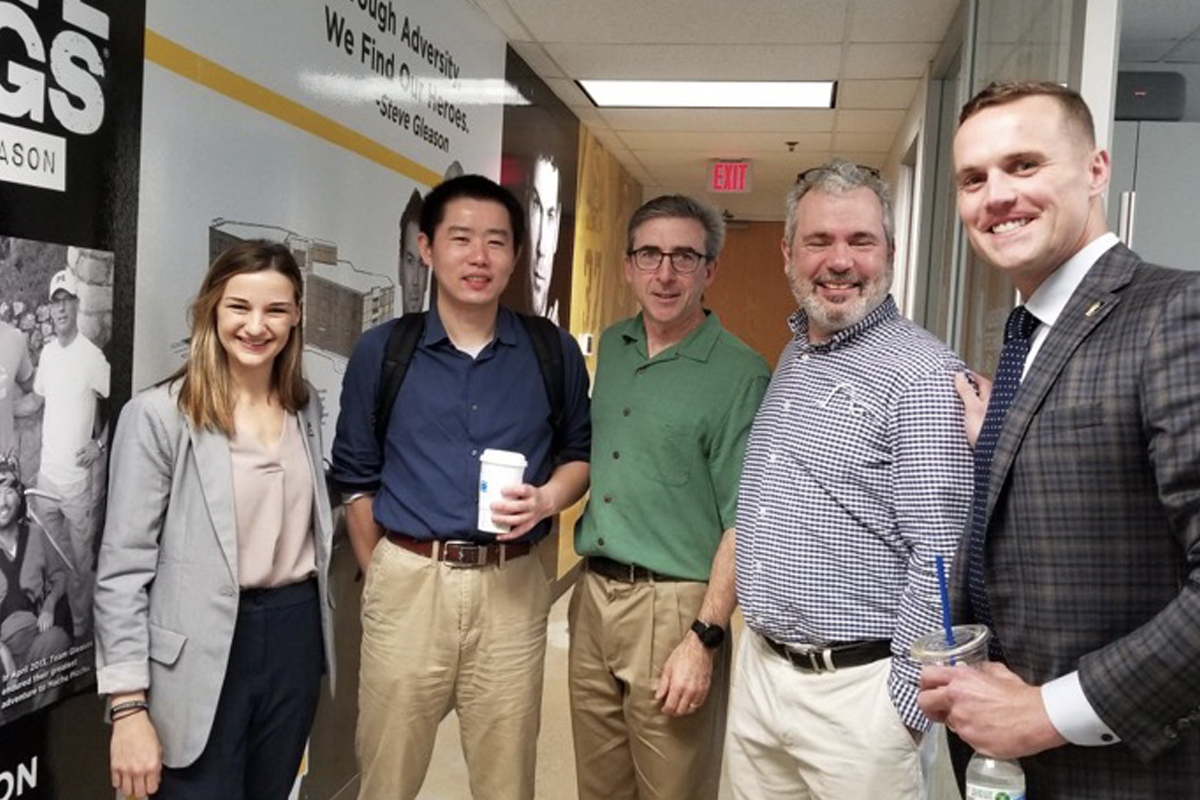
From left to right: Emily Kornman (MCD CCC-SLP, Team Gleason’s Lead Innovation Specialist), Shanqing Cai (Google Software Engineer), Bob McDonald (Google Technical Program Manager), Phil Nelson (Director of Engineering, Google Research), and Blair Casey (Team Gleason Executive Director) collaborating on the SpeakFaster project in the office.