January 2026
by Tim Pelletier
The Leap: A Defiant Flight Over Moab
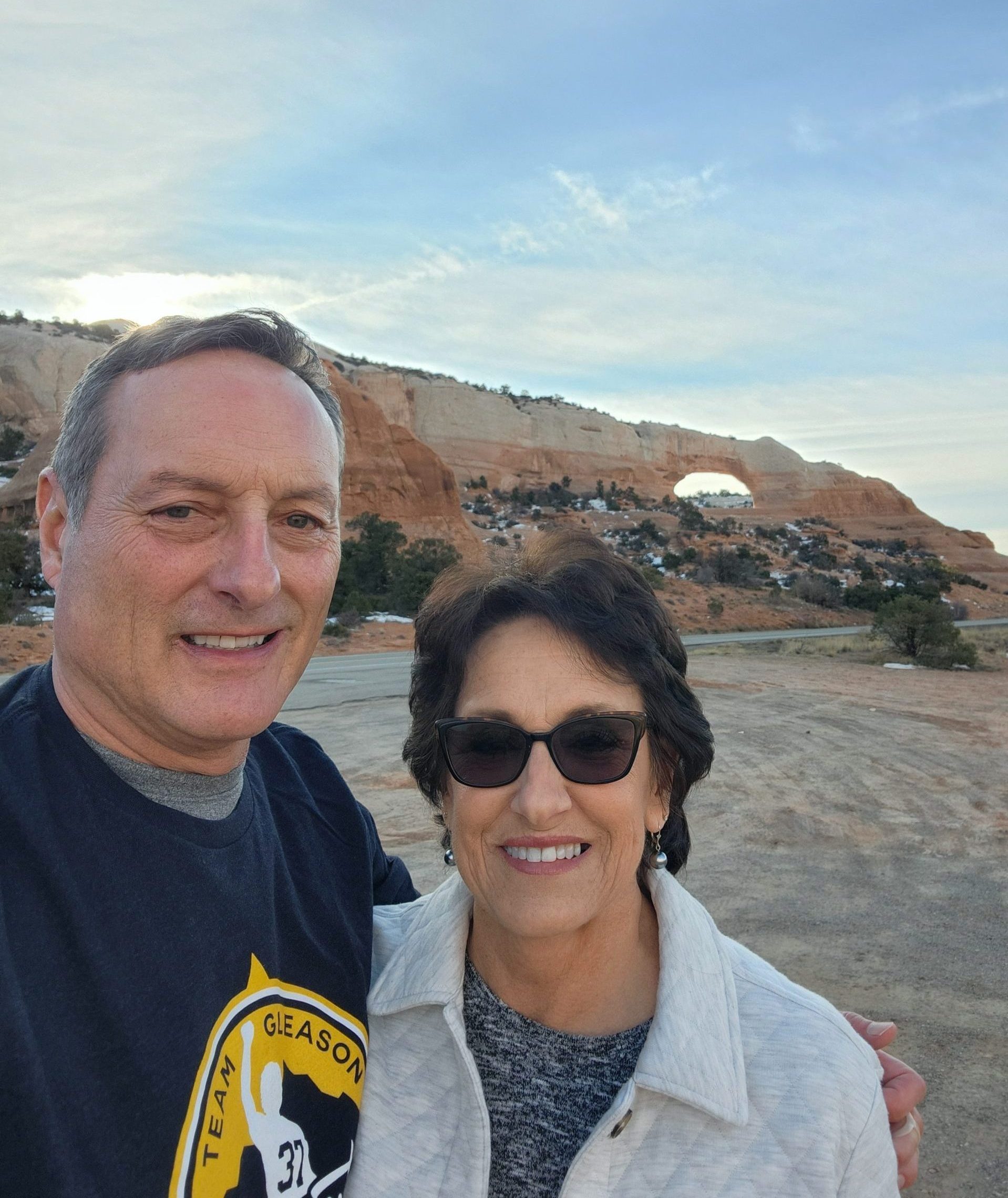
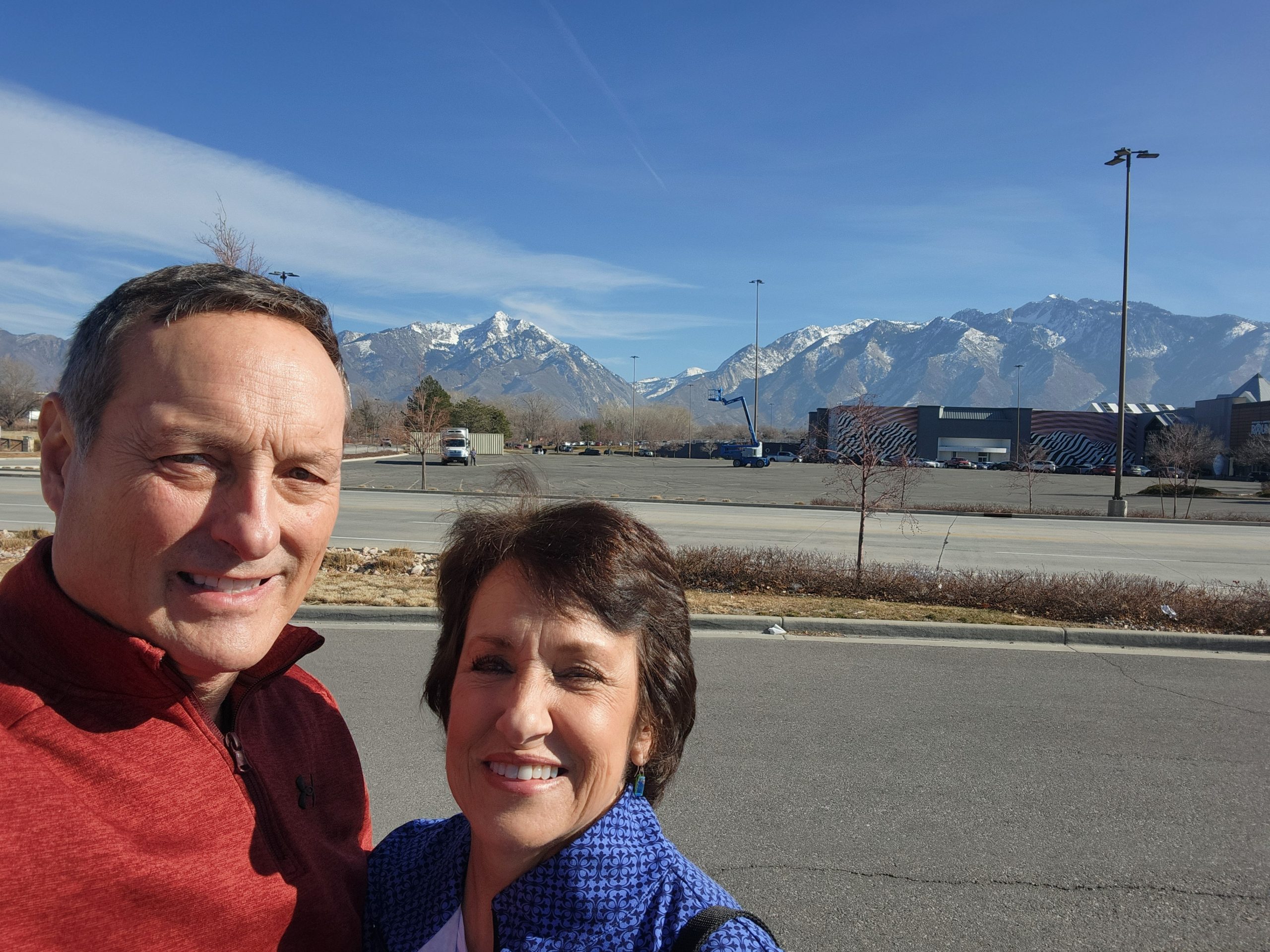
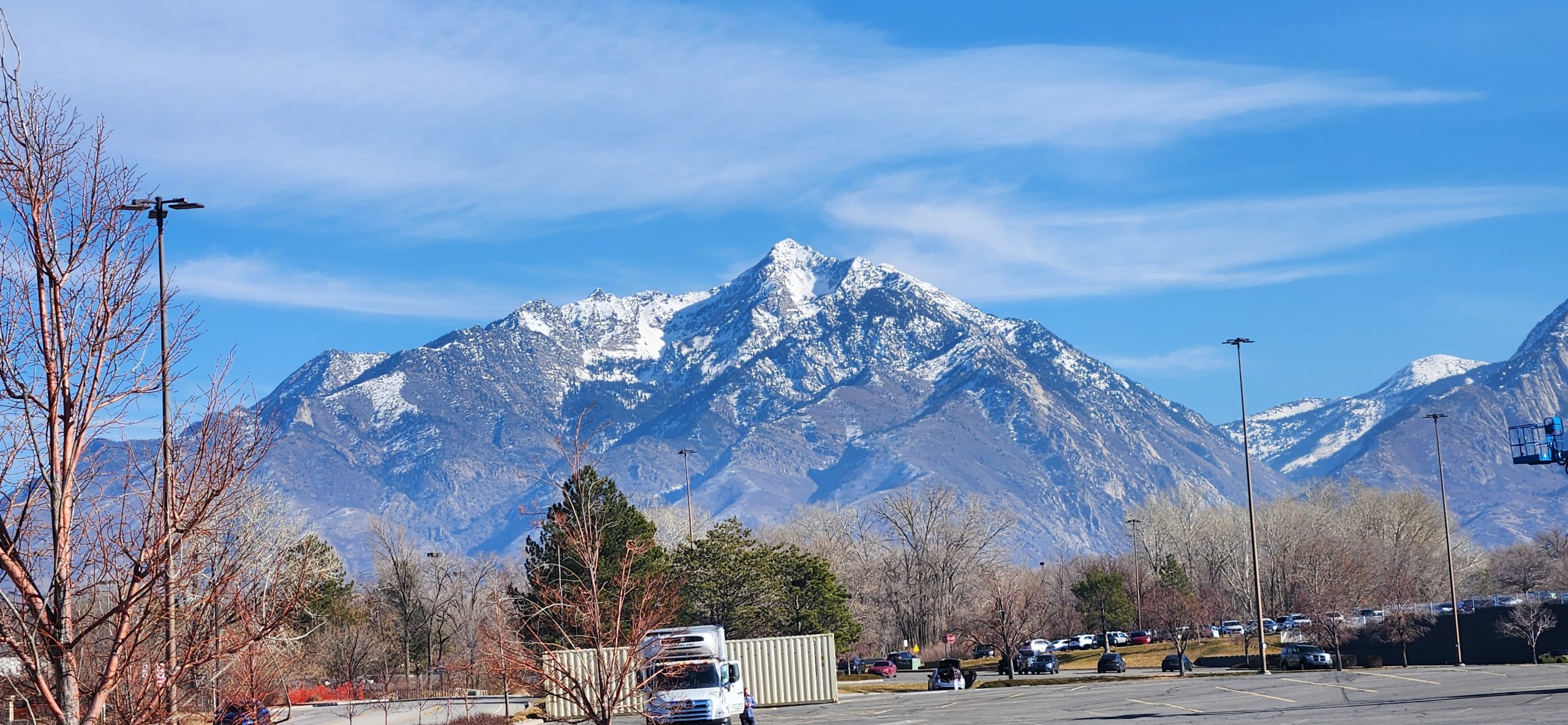
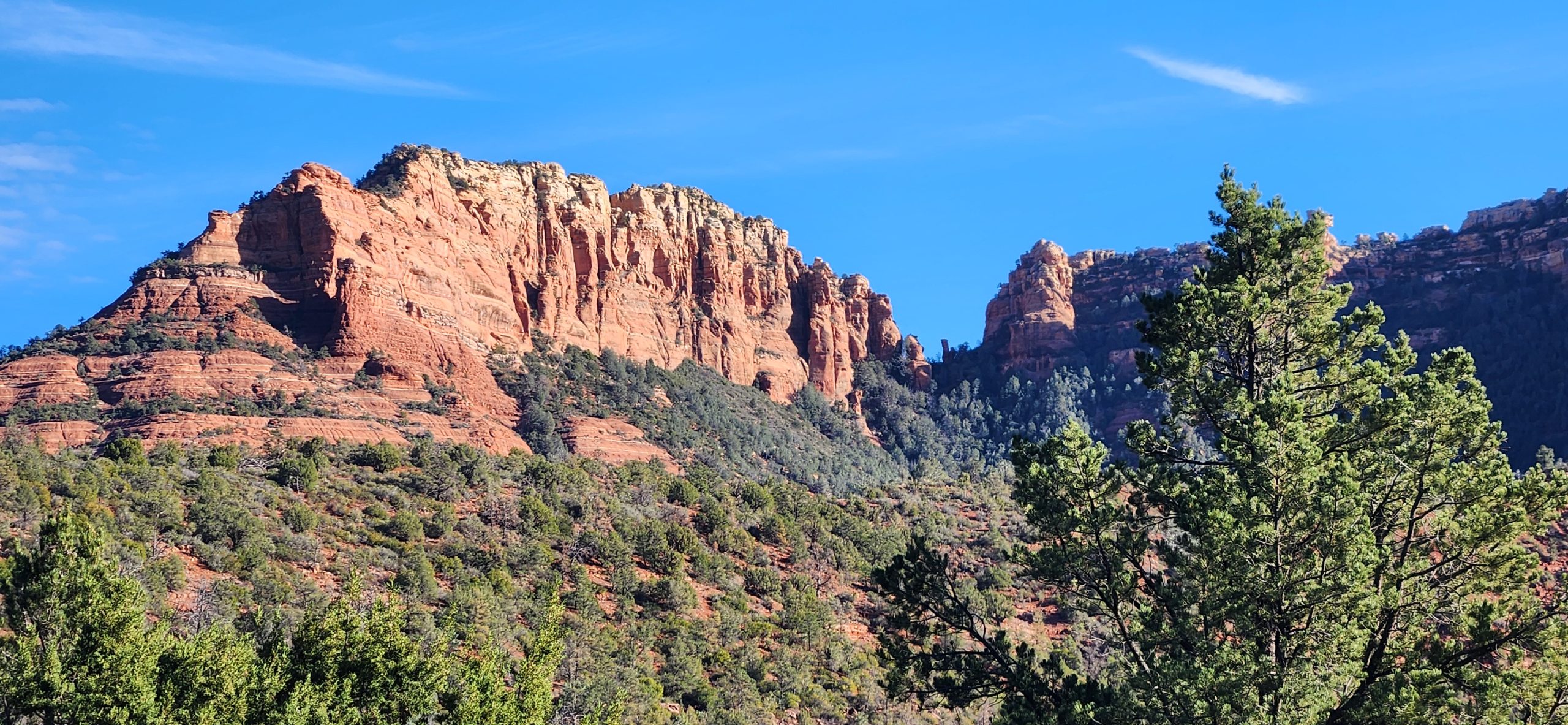
Our journey began in the shivering, 4:00 AM dark of a Maine winter. After a dual battle with a relentless New England snowstorm and a stubborn mechanical failure at Logan, Janna and I finally traded the Atlantic coast for the jagged horizon of the West. We touched down in Salt Lake City late that evening, exhausted but expectant, resting for a night before making the 3.5-hour pilgrimage south to Moab. As the sun rose the next morning, the landscape transformed into a “western splendor” that felt like another planet—a stark, stunning contrast to the pine forests we left behind.
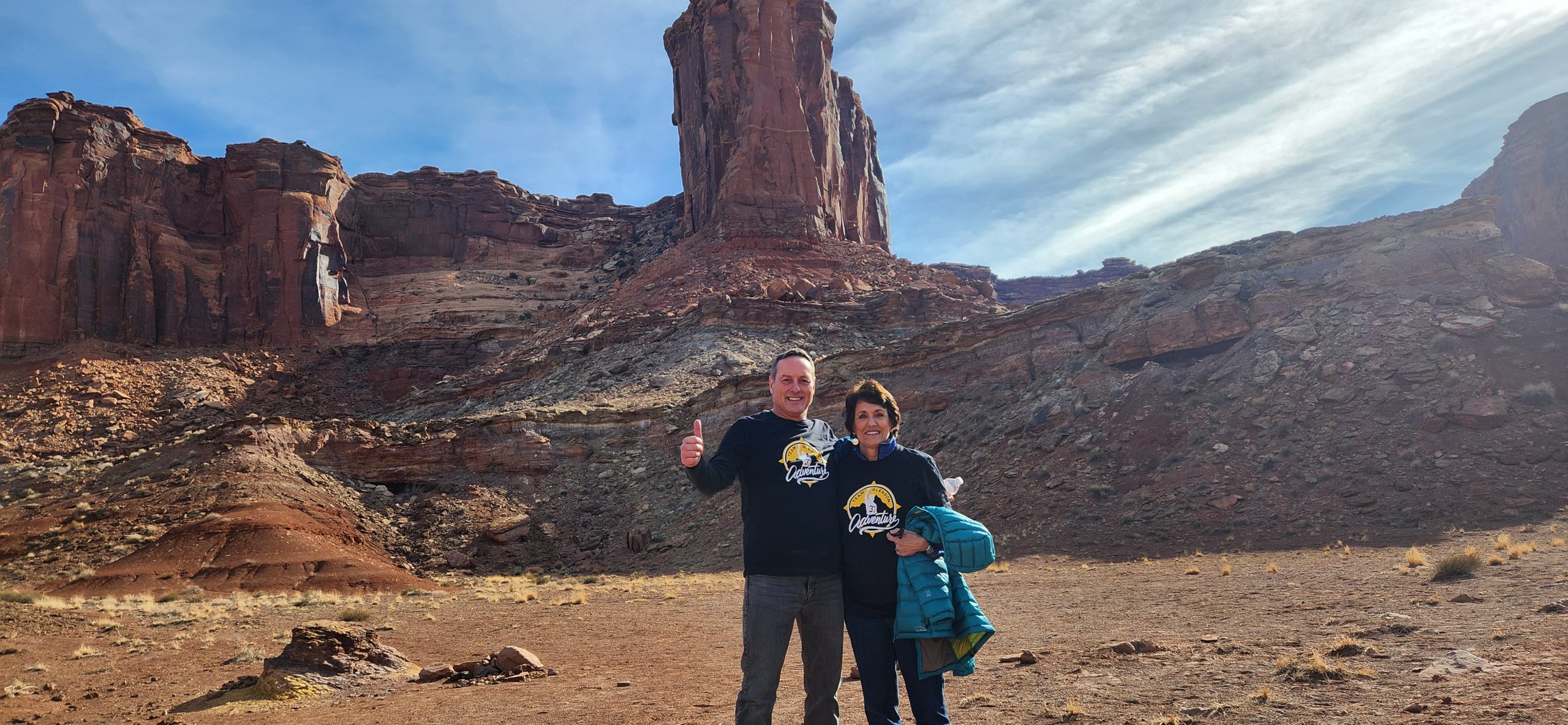
The logistics were as dramatic as the scenery. Janna took a hair-raising, mile-long descent down Mineral Bottom Road—a harrowing ribbon of dirt with hairpin turns and 1,000-foot drops that made the rental car’s brakes groan in protest. Meanwhile, I hiked with the team toward the precipice, the desert wind a constant companion as we approached the edge of the world.
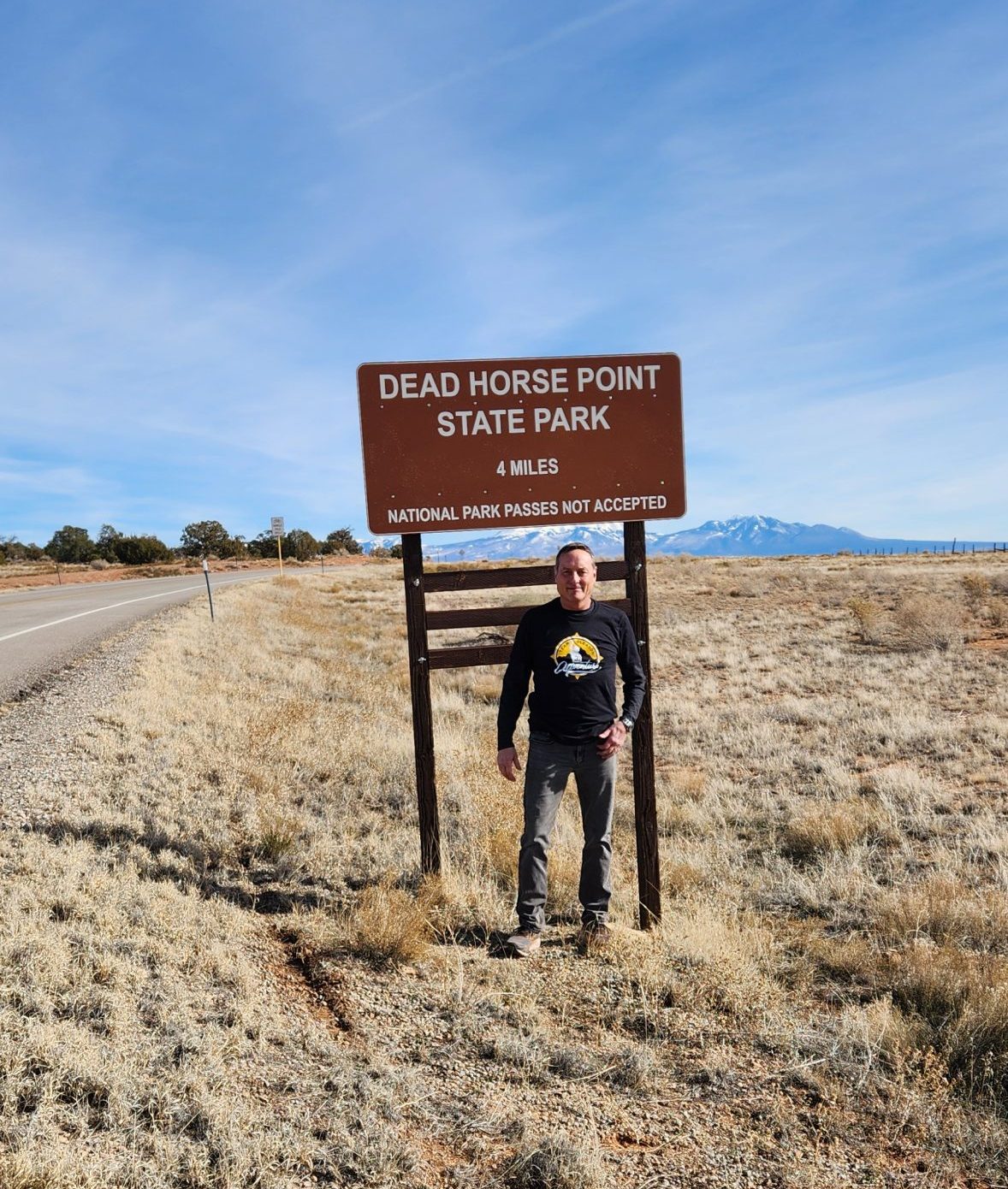
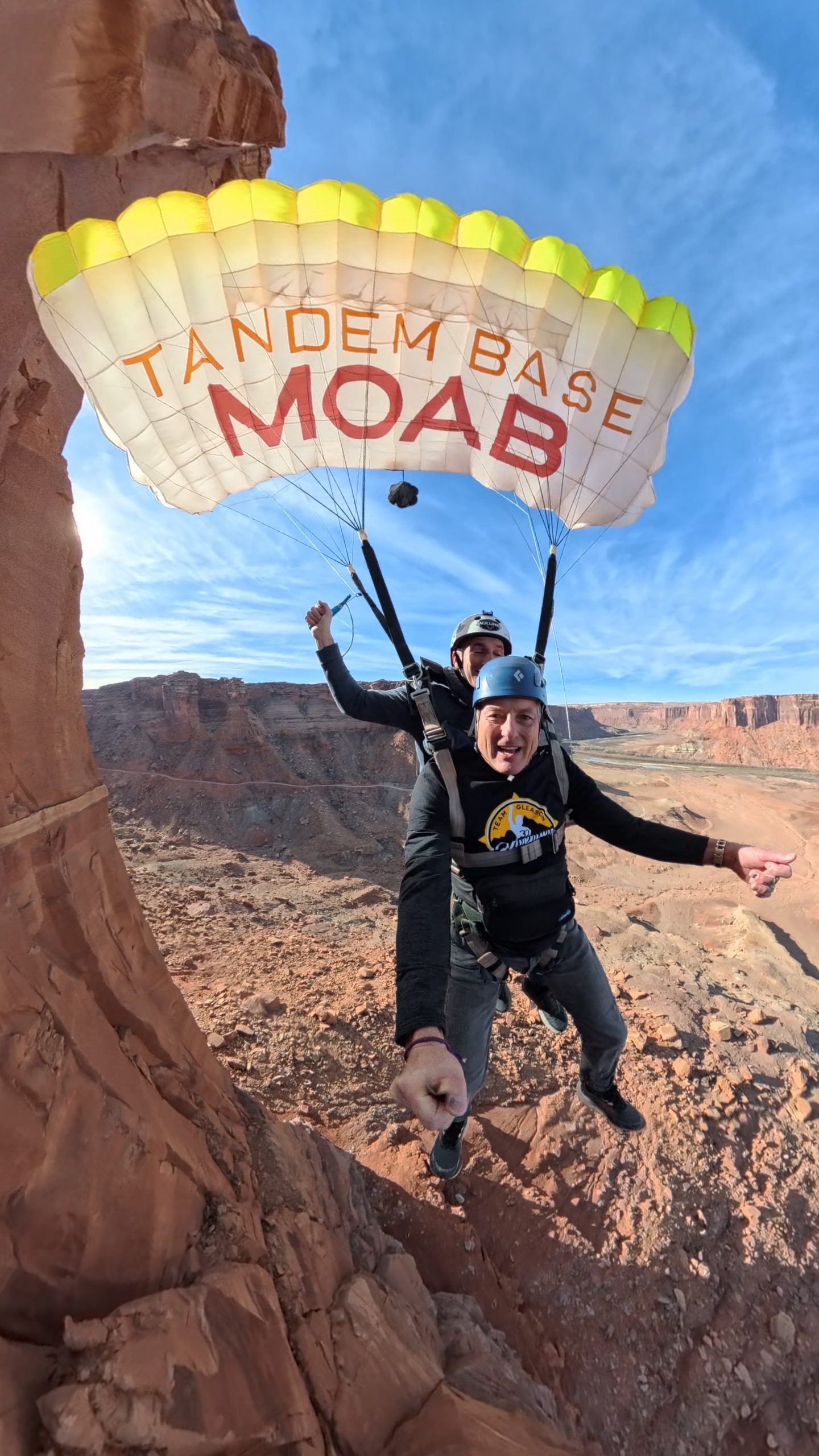
The morning of the jump was a natural masterpiece: a sky of piercing, crystalline blue and a sun that radiated a surprising, welcoming warmth. At Dead Horse National Park, we were met by the jump team from Tandem Base Moab—Matt, Drew, Stevo, and Dane—and a small congregation of bighorn sheep that wandered past us, a rare and “blessed” omen for the day ahead.
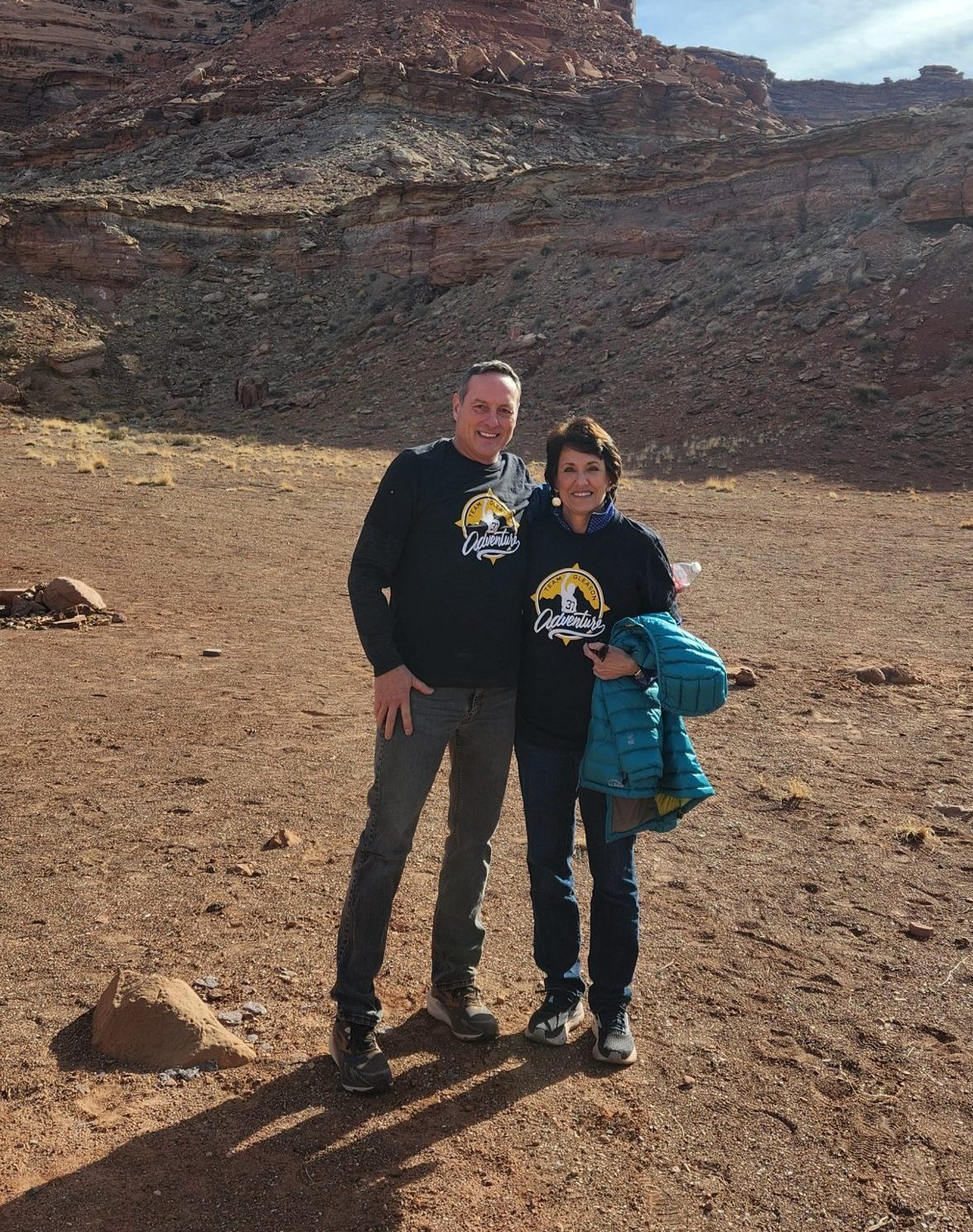
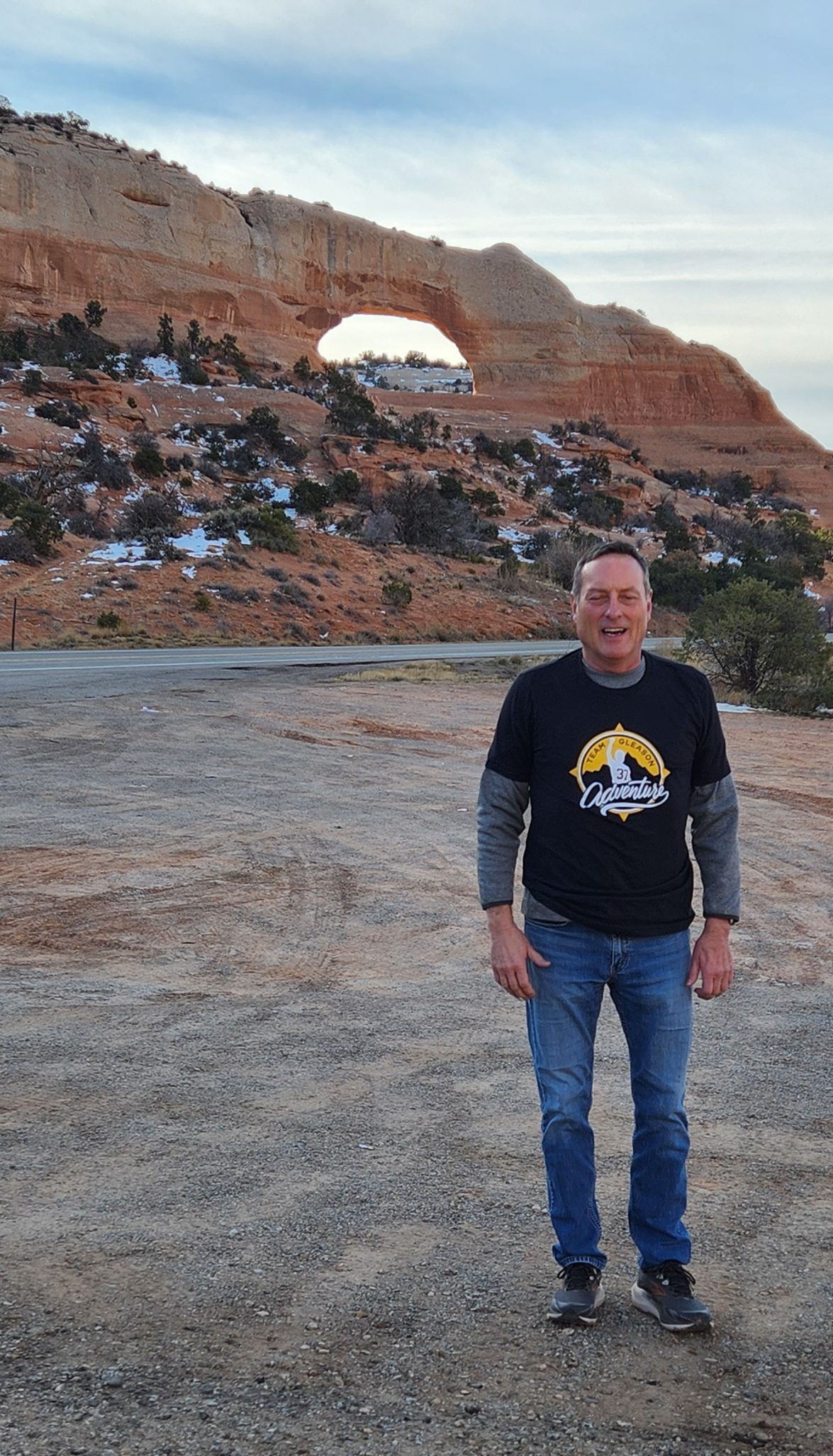
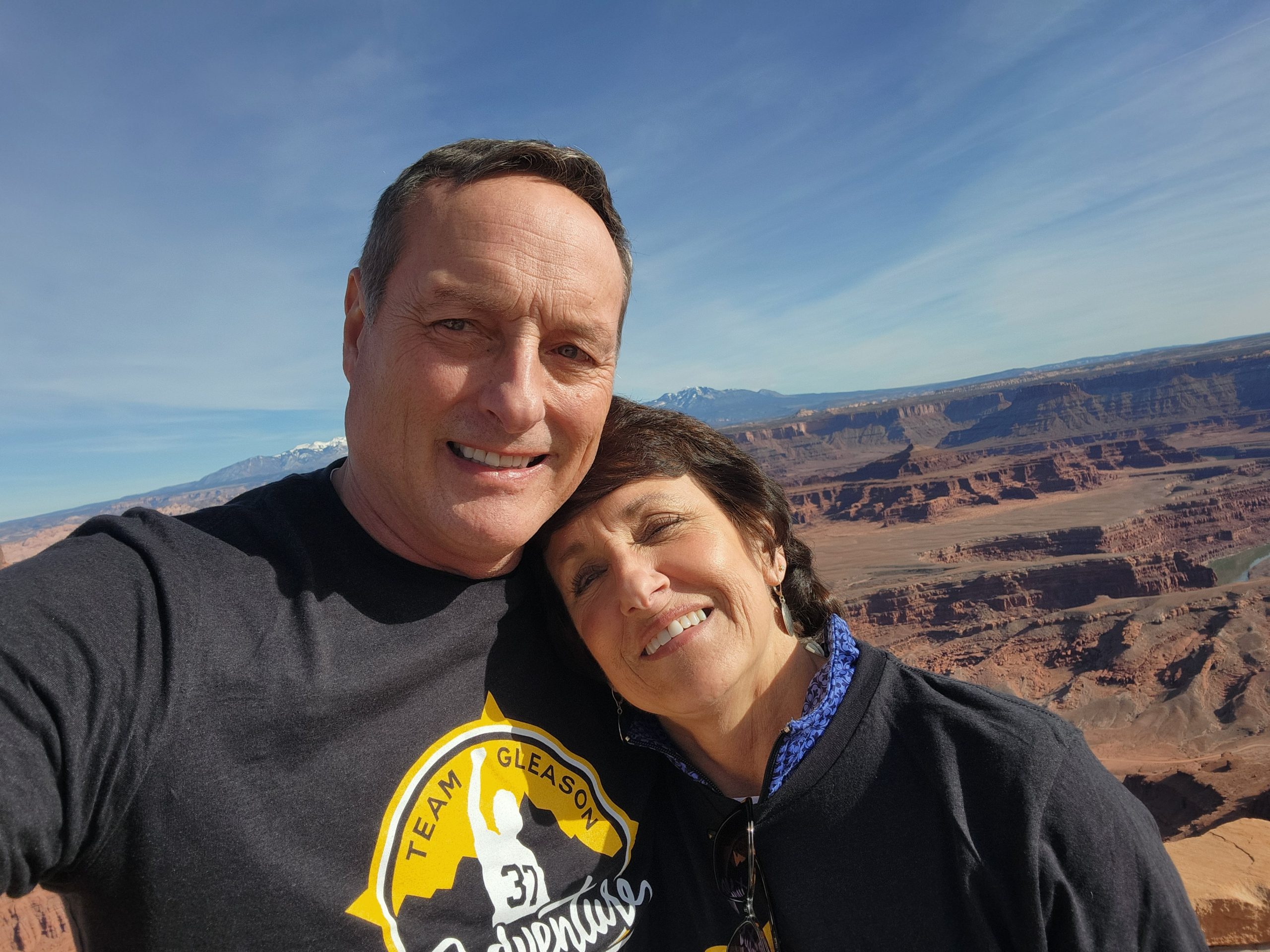
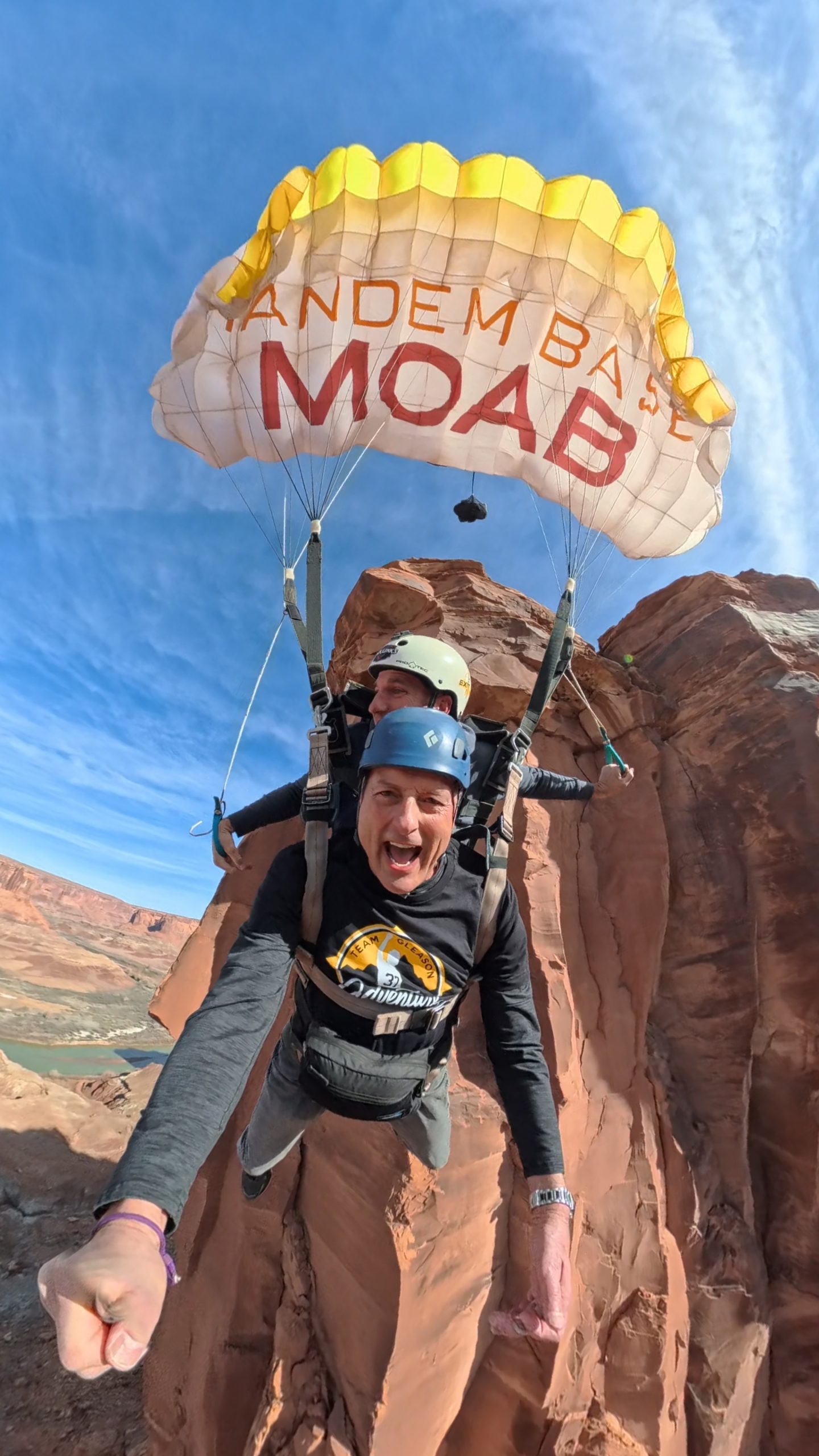
It has been roughly eighteen months since my ALS diagnosis. The disease has been a thief, stealing the strength from my arm and the stability from my legs, but standing on that cliff’s edge, I felt an unexpected, towering peace. There was no room for fear, only the defiant mantra of Steve Gleason: “I am not dead yet!” The jump itself was a revelation of the soul. As I leaned into the “impending doom” of the canyon, the gravity of my diagnosis—the pain, the exhaustion, and the heavy mantle of the disease—simply evaporated. For those moments in the air, I was weightless. I wasn’t a patient or a statistic; I was a spirit gliding through a silent cathedral of burnt orange and ancient, rust-colored stone.
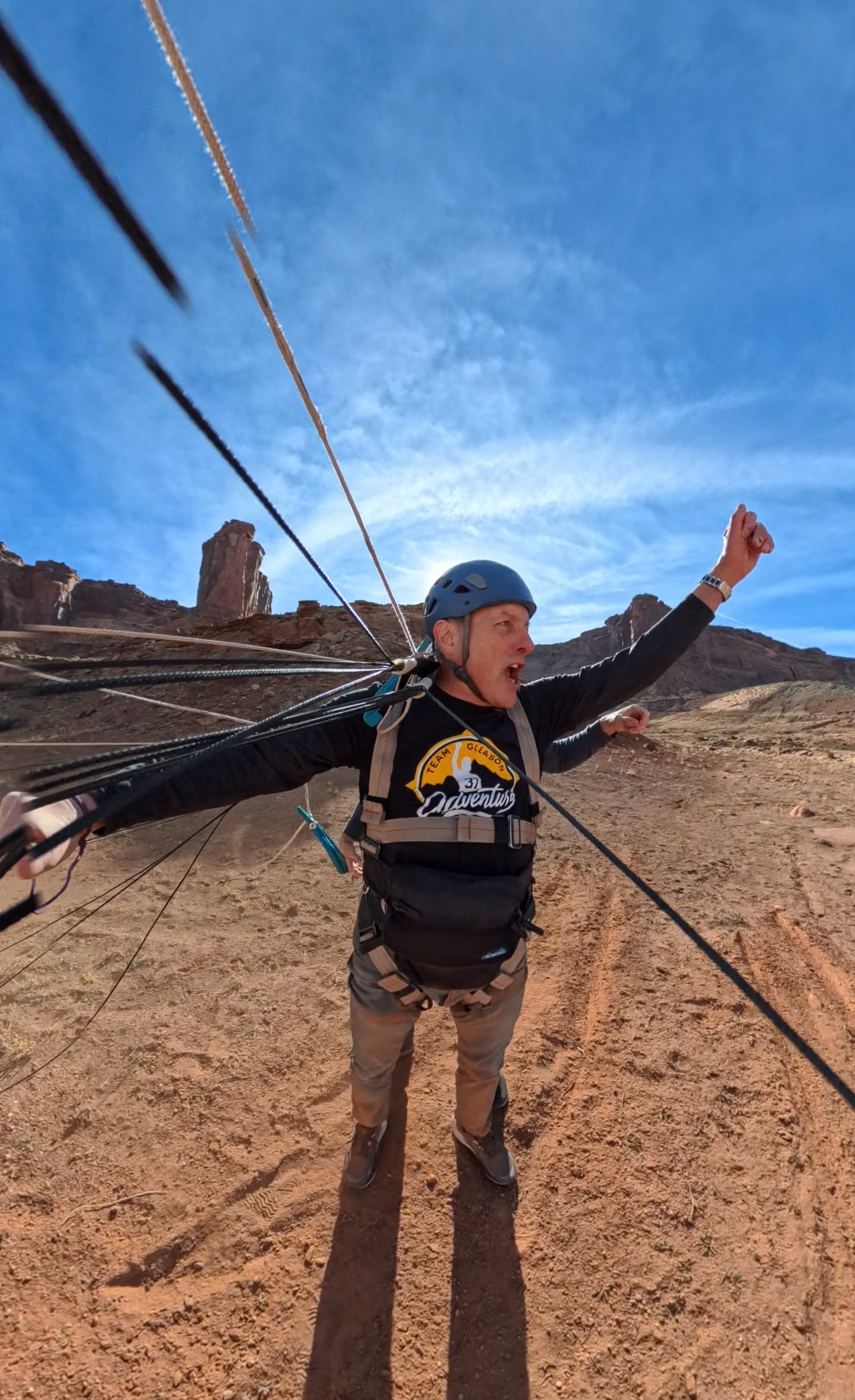
We hit the earth with a perfect 20-foot skid, and I let out a primal scream of joy that echoed off the canyon walls. I have never felt more alive. None of this would have been possible without the incredible generosity of Team Gleason. I am profoundly grateful to the organization and to Steve Gleason himself for turning a distant dream into a reality.
Steve, your bravery through fifteen years of battling this disease has given me a renewed sense of purpose. You helped me find the strength and courage within myself to face my own journey with my head held high. Thank you for showing us all how to truly live.
No White Flags.